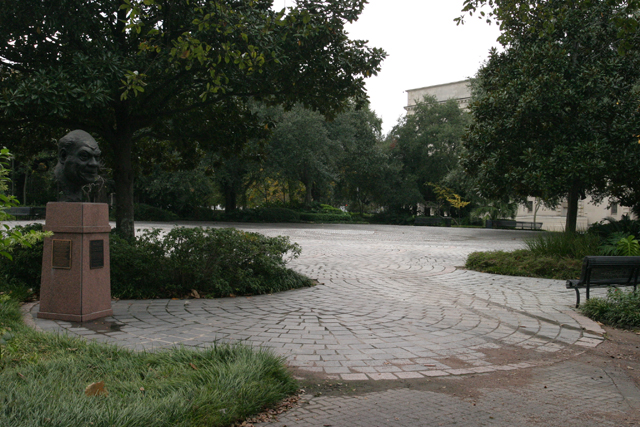
Congo Square means a lot to the population of New Orleans and the
history of the city. Every statue represents the creation of Jazz music and
dance. It was a place where slaves would get together on Sundays with Native
Americans and they would dance and create beats. Congo Square was the place
where they were “free” to forget about all the pain they had to face during
slavery and also make some extra money by selling their foods such as rice and
beans.


Today, Congo Square holds a special symbolic importance to
African-Americans. It is significant because of the role the square played in
New Orleans' musical heritage and as a symbol of the early African
contributions to the origins of jazz and other American musical forms. In the
21st century, standing in tribute to the accomplishments of the tightly knit
New Orleans musical community,
Congo Square remains a memorial to the artists who transformed their sound and exported it throughout the world. Congo Square was recently listed on the National Register of Historic Places.
Congo Square remains a memorial to the artists who transformed their sound and exported it throughout the world. Congo Square was recently listed on the National Register of Historic Places.
Work Cited
"Congo Square, the Soul of New Orleans." Congo
Square, the Soul of New Orleans. African American Registry, n.d. Web. 12
Dec. 2015. http://www.aaregistry.org/historic_events/view/congo-square-soul-new-orleans
"Congo Square." Congo Square. The Official
Tourism Site of the City of New Orleans, n.d. Web. 12 Dec. 2015.
<http://www.neworleansonline.com/directory/location.php?locationID=2317>.

No comments:
Post a Comment